
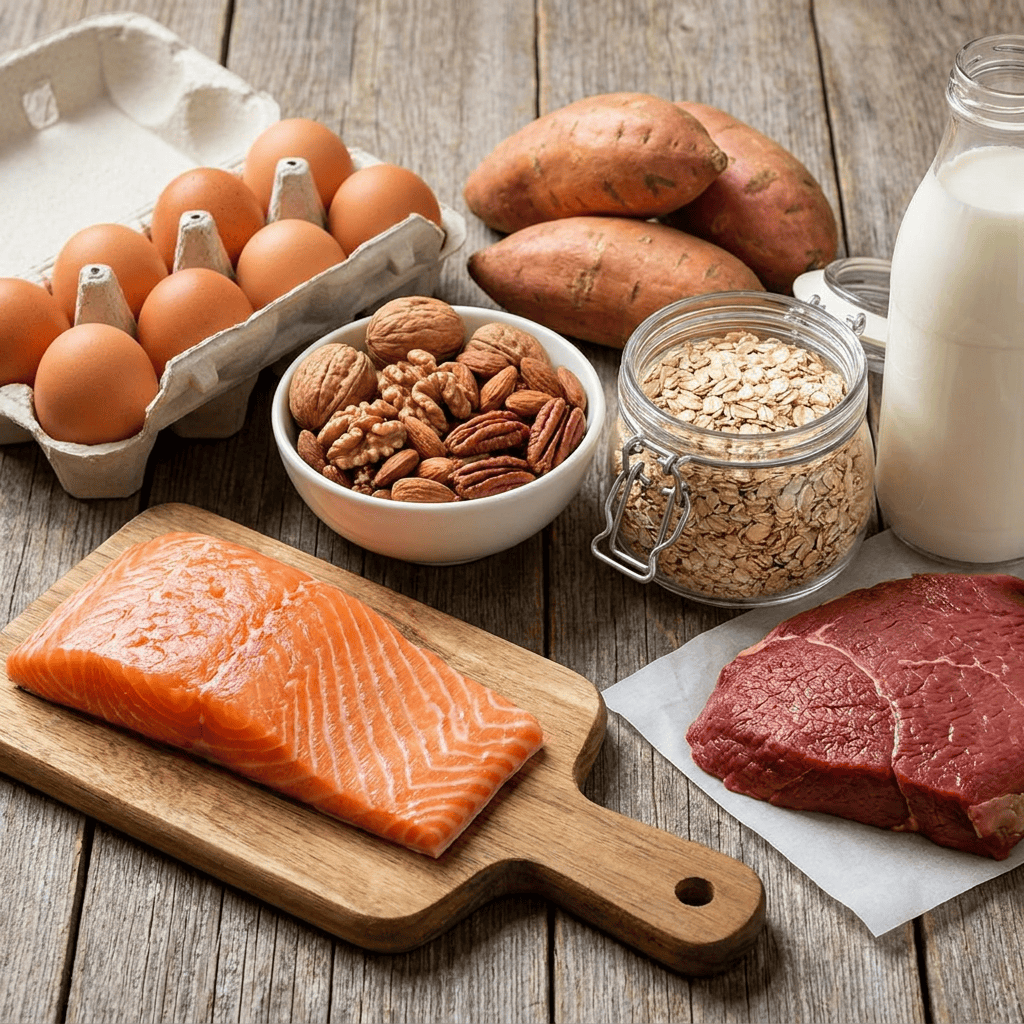
Muscle gets built in the kitchen. Everyone says it, most guys ignore it, and then wonder why their gym routine hasn’t produced gains in six months. Here’s the truth: without a real calorie surplus and enough protein to rebuild what you tore up training, you’ll spin your wheels for years.
This guide breaks down the exact food framework for adding lean mass — what to eat, how much, and when — with a full daily meal plan you can actually follow. It fits within the complete muscle-building framework we cover across STSH, but this is where 60% of your results actually come from.
Why Food Is 60% Of Muscle Building
Training tells your body to build muscle. Food gives it the raw materials. If either side of that equation is missing, growth stalls.
You can lift five days a week with perfect form, follow the best hypertrophy program on paper, and gain almost nothing if your intake is 200 calories short of what you need. This isn’t a fringe opinion — it’s the finding of every serious study on hypertrophy since the 1970s. In a caloric deficit, your body prioritizes survival over synthesis. Even with adequate protein, growth is muted.
The good news: fixing the food side is more straightforward than fixing the training side. You don’t need a personal chef. You need calorie targets, macro targets, and a rotation of high-quality foods. That’s it.
The Bulking Math: How Many Calories You Actually Need
Your maintenance calories are the number where your weight stays flat. You add on top of that.
Rough calculation:
- Bodyweight in pounds × 15 for maintenance if you’re moderately active (train 3-5x per week)
- Bodyweight × 14 if you’re sedentary outside the gym
- Bodyweight × 16 if you’re highly active (physical job or 6-day training)
For a 180-lb guy training four days a week: 180 × 15 = 2,700 calories to maintain.
To build muscle, add 300-500 calories on top. That’s the sweet spot most sports-nutrition literature converges on. Less than that and growth stalls. More than that and you gain fat faster than muscle without adding meaningful growth on top.
Your bulking target for that 180-lb example: 3,000-3,200 calories per day.
Track for two weeks before adjusting. If bodyweight isn’t moving up 0.5-1 pound per week, add another 200 calories per day. If it’s moving up faster than that, you’re piling on fat you’ll regret when you cut.
The one rule of bulking: slow and steady beats aggressive every time. A 12-month clean bulk adding 12 pounds of mostly-lean weight beats a 4-month dirty bulk adding 20 pounds where 12 of them are fat.
Protein: The Foundation
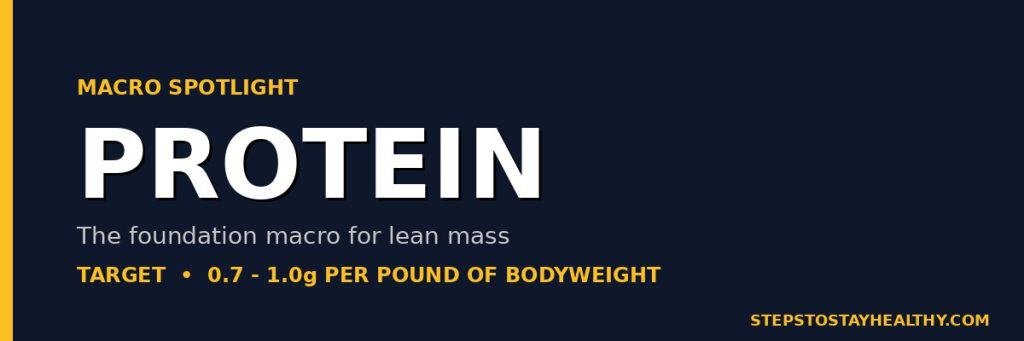
Protein isn’t just a macro — it’s the actual physical building material your body uses to synthesize new muscle tissue. Without enough of it, no amount of extra calories will turn into muscle.
Target: 0.7-1.0 grams per pound of bodyweight per day.
For a 180-lb guy: 130-180g of protein daily.
Higher end if you’re bulking hard and training six days a week. Lower end if you’re intermediate and training four days. Above 1g per pound the research shows diminishing returns for muscle synthesis — you’re just spending money on extra whey.
The top 10 protein foods for bulking:
- Chicken breast — 31g protein per 100g cooked, cheap, no fuss
- Lean ground beef (93/7) — 26g per 100g, includes creatine and iron
- Whole eggs — 6g per egg with a full amino acid profile
- Greek yogurt (0% fat, plain) — 10g per 100g, excellent recovery snack
- Cottage cheese (low fat) — 11g per 100g, slow-digesting casein for overnight
- Salmon — 22g per 100g plus omega-3s that reduce training soreness
- Whey protein — 20-25g per scoop, cheapest and easiest way to hit target
- Turkey breast — 29g per 100g, virtually zero fat
- Tuna (canned in water) — 26g per 100g, cheap portable protein
- Tofu / tempeh — 17-19g per 100g, plant option that covers the gap on meat-free days
Rotate them. Eating the same three foods every day is how bulks fail — you get bored and start skipping meals.
Carbs: Your Training Fuel
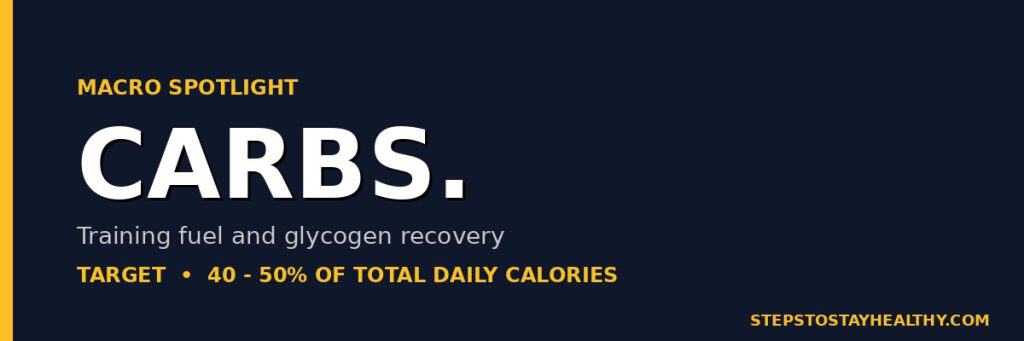
Carbs get demonized in fitness content, but they’re the reason your workouts have any intensity. Glycogen — the stored form of carbs in your muscles — is what fuels the last three reps of your last set. Cut carbs, and your training quality drops within two weeks.
Target: 40-50% of your total calories from carbs.
For that 3,200-calorie bulk: 320-400g of carbs daily.
Not fear-inducing — just necessary math.
The top 10 carb sources for bulking:
- Oats — cheap, filling, low glycemic, gets you 400+ calories in a bowl
- White rice — post-workout gold; digests fast, refills glycogen fast
- Sweet potatoes — micronutrient-dense, easier to eat volume than white potato
- Pasta — dense calories per plate, easy to hit target
- Bananas — pre-workout carb source with potassium
- Berries — antioxidants that offset training oxidative stress
- Whole wheat bread — sandwich vehicle for lean protein
- Beans and legumes — fiber + protein bonus
- Whole wheat tortillas — burrito wraps for calorie-dense meals
- Bagels — the underrated bulking food; 250-350 calories each with almost zero prep
Fast carbs (white rice, bagels, bananas) before and after training. Slow carbs (oats, sweet potato, beans) at other meals.
Fats: Don’t Fear Them
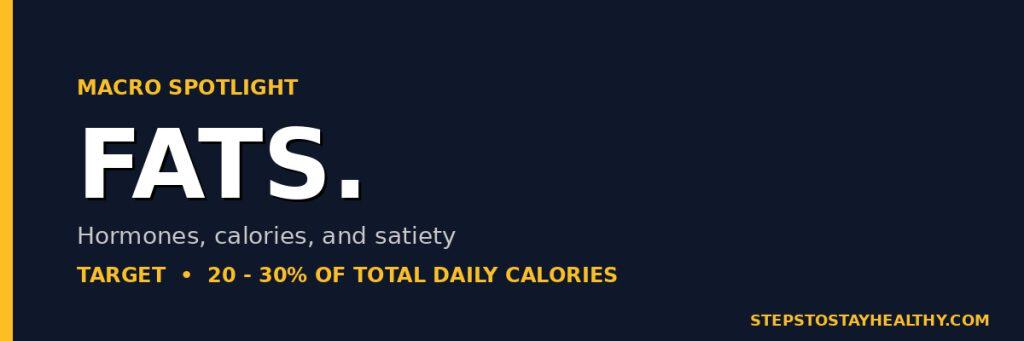
Fats are calorie-dense (9 calories per gram vs 4 for carbs and protein), which is a bulking cheat code — they let you hit high calorie targets without eating a wheelbarrow of food.
Target: 20-30% of total calories from fat.
For that 3,200-calorie bulk: 70-105g of fat daily.
Cholesterol from dietary fats supports testosterone production. Very low-fat diets consistently show suppressed testosterone in the research, which is one reason old-school “cut all fats” bulking advice ages badly. The connection to testosterone matters enough that we’ve covered how muscle actually gets built in depth including the hormonal side.
The top 10 fat sources for bulking:
- Extra virgin olive oil — pour on salads and cooked veg for easy calorie boost
- Avocados — 240 calories each, mostly monounsaturated fat
- Whole eggs — protein AND fat in one food
- Almonds / walnuts / cashews — a handful adds 200 calories fast
- Peanut butter (natural, no added sugar) — the college-athlete calorie bomb
- Full-fat Greek yogurt — swap the 0% for full-fat when you need to add calories
- Salmon / mackerel — omega-3s reduce joint inflammation
- Coconut oil — MCTs get used for energy rather than storage
- Dark chocolate (85%+) — antioxidants, iron, and a small joy dose
- Grass-fed butter or ghee — vitamin K2 helps calcium absorption
The 30 Best Bulking Foods, One Screenshot Away
Screenshot this table and pin it to your fridge.
| Protein (top 10) | Carbs (top 10) | Fats (top 10) |
|---|---|---|
| 1. Chicken breast | 1. Oats | 1. Olive oil |
| 2. Lean ground beef | 2. White rice | 2. Avocado |
| 3. Whole eggs | 3. Sweet potato | 3. Whole eggs |
| 4. Greek yogurt (0%) | 4. Pasta | 4. Almonds |
| 5. Cottage cheese | 5. Bananas | 5. Peanut butter |
| 6. Salmon | 6. Berries | 6. Full-fat Greek yogurt |
| 7. Whey protein | 7. Whole wheat bread | 7. Salmon |
| 8. Turkey breast | 8. Beans / legumes | 8. Coconut oil |
| 9. Canned tuna | 9. Whole wheat tortillas | 9. Dark chocolate |
| 10. Tofu / tempeh | 10. Bagels | 10. Grass-fed butter |
A Full Sample Day At 3,200 Calories
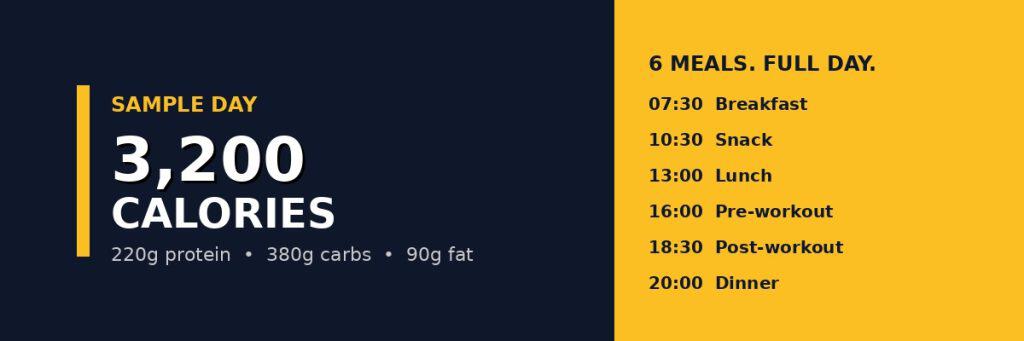
Screenshot-friendly. Save it for when the next bulk starts.
| Meal | Foods | Calories | Protein |
|---|---|---|---|
| Breakfast (7:30 AM) | 3 whole eggs + 2 egg whites scrambled, 1 cup oats cooked with 1 cup 2% milk, 1 banana, coffee | ~750 | 45g |
| Snack (10:30 AM) | 200g Greek yogurt (0%) with 30g almonds and a drizzle of honey, 1 apple | ~350 | 30g |
| Lunch (1 PM) | 200g grilled chicken breast, 1.5 cups cooked white rice, mixed salad with olive oil, half avocado | ~800 | 50g |
| Pre-workout (4 PM) | 2 slices whole wheat bread with 4 tbsp natural peanut butter, whey protein shake in water | ~350 | 25g |
| Post-workout (6:30 PM) | Whey protein shake, 1 banana | ~200 | 25g |
| Dinner (8 PM) | 200g lean ground beef (93/7), 200g sweet potato baked, steamed broccoli with olive oil, small piece dark chocolate | ~750 | 45g |
| Daily totals | 6 meals | ~3,200 | 220g |
Macro totals: ~380g carbs, 90g fat.
This is one template. Rotate protein and carb sources across the week to keep boredom from killing your compliance. Swap ground beef for salmon on some dinners. Swap oats for a bagel some breakfasts. The framework matters, not the exact foods.
Meal Timing: When It Actually Matters
The “anabolic window” myth got beaten to death in the 2000s and it deserves burial. Research consistently shows total daily protein matters far more than exact timing.
That said, two timing rules genuinely help:
- Protein spread across the day. Four to five meals of 30-45g protein each beats two meals of 90g each. Muscle protein synthesis maxes out around 40-45g per feeding — anything above that gets partially wasted.
- Carbs around your training. Fast carbs 30-60 minutes before training give you the glucose to fuel intensity. Fast carbs within an hour post-workout replenish glycogen more efficiently. This isn’t magic — it’s just harder to train hard on empty tanks.
Skip breakfast? Fine. Intermittent fast? Fine. Late-night carbs? Fine. All of that matters far less than hitting daily totals.
Common Bulking Mistakes That Cost You Gains
Dirty bulking without a target. “Eating whatever” adds fat you’ll regret three months from now. Track for the first month at least until you know intuitively what 3,200 calories looks like.
Ignoring vegetables. Bulking without micronutrients from vegetables leads to sluggish digestion, poor recovery, and subclinical deficiencies that quietly cap your performance. Aim for 4-5 servings per day.
Cutting carbs to “stay lean.” Then blaming your lack of gains on genetics. Low carbs + hard training = flat workouts, muted recovery, muted growth.
Sudden calorie jumps. Going from 2,000 to 3,500 overnight lands you with a stomach ache and 4 pounds of water. Ramp calories up by 200-300 per day per week until you’re at target.
Insufficient protein. The most common mistake. If you’re not measuring, you’re probably 30-40g under your target daily. That’s the difference between growing and maintaining.
Bringing It Together
Bulking done well is boring. There’s no magic — just consistent protein intake, a modest calorie surplus, real food most of the time, and patience across 12-24 weeks. Get those right and you’ll add 10-20 pounds of mostly-lean weight per year. That’s what actually moves the needle over three-year timelines.
For where nutrition fits within the broader system — the four pillars of training, eating, hormonal support, and Hollywood-tested routines — see how muscle actually gets built.
The plate on the counter matters more than the app on your phone. Start there.
Frequently Asked Questions
How Long Should I Bulk Before Cutting?
Long enough to add meaningful mass — usually 3-6 months minimum. Bulk-cut cycles shorter than 8-12 weeks tend to produce mostly water and glycogen weight, not real hypertrophy. If you’re at a leaner starting body fat (12-15%), you can bulk for 6-9 months before cutting becomes necessary. If you’re starting closer to 18-20% body fat, shorter bulks (12-16 weeks) with more frequent mini-cuts serve you better.
Do I Need Supplements To Bulk Successfully?
No. Everything in this guide works with whole foods alone. That said, whey protein is a legitimate value proposition — the cheapest and easiest way to hit protein targets. Creatine monohydrate at 5g per day is the one other supplement with genuine hypertrophy support in the research, and it’s about $15 per month. Anything beyond those two is a nice-to-have, not a requirement. For the broader picture on what supplements actually earn a spot in a bulking stack, we’ve reviewed the leading testosterone boosters and CrazyBulk’s legal steroid stack separately.
What If I Can’t Stomach That Much Food?
Start smaller. Add 200 calories at a time. Increase meal frequency instead of meal size — 6 meals of 500 calories is easier than 3 meals of 1,000. Blend high-calorie shakes (banana + peanut butter + oats + milk + whey = 900 calories in a glass). And if you genuinely can’t hit target after four weeks of trying, you may be leaner than you think, and your maintenance is higher than the formula suggested. Recalculate.
References
- Morton RW, Murphy KT, McKellar SR, et al. (2018) – A systematic review, meta-analysis and meta-regression of the effect of protein supplementation on resistance training-induced gains in muscle mass and strength in healthy adults. Br J Sports Med. 52(6):376-384.
- Slater GJ, Dieter BP, Marsh DJ, Helms ER, Shaw G, Iraki J. (2019) – Is an Energy Surplus Required to Maximize Skeletal Muscle Hypertrophy Associated With Resistance Training? Front Nutr. 6:131.
- Schoenfeld BJ, Aragon AA, Krieger JW. (2013) – The effect of protein timing on muscle strength and hypertrophy: a meta-analysis. J Int Soc Sports Nutr. 10(1):53.
- Aragon AA, Schoenfeld BJ. (2013) – Nutrient timing revisited: is there a post-exercise anabolic window? J Int Soc Sports Nutr. 10(1):5.
- Helms ER, Aragon AA, Fitschen PJ. (2014) – Evidence-based recommendations for natural bodybuilding contest preparation: nutrition and supplementation. J Int Soc Sports Nutr. 11(1):20.